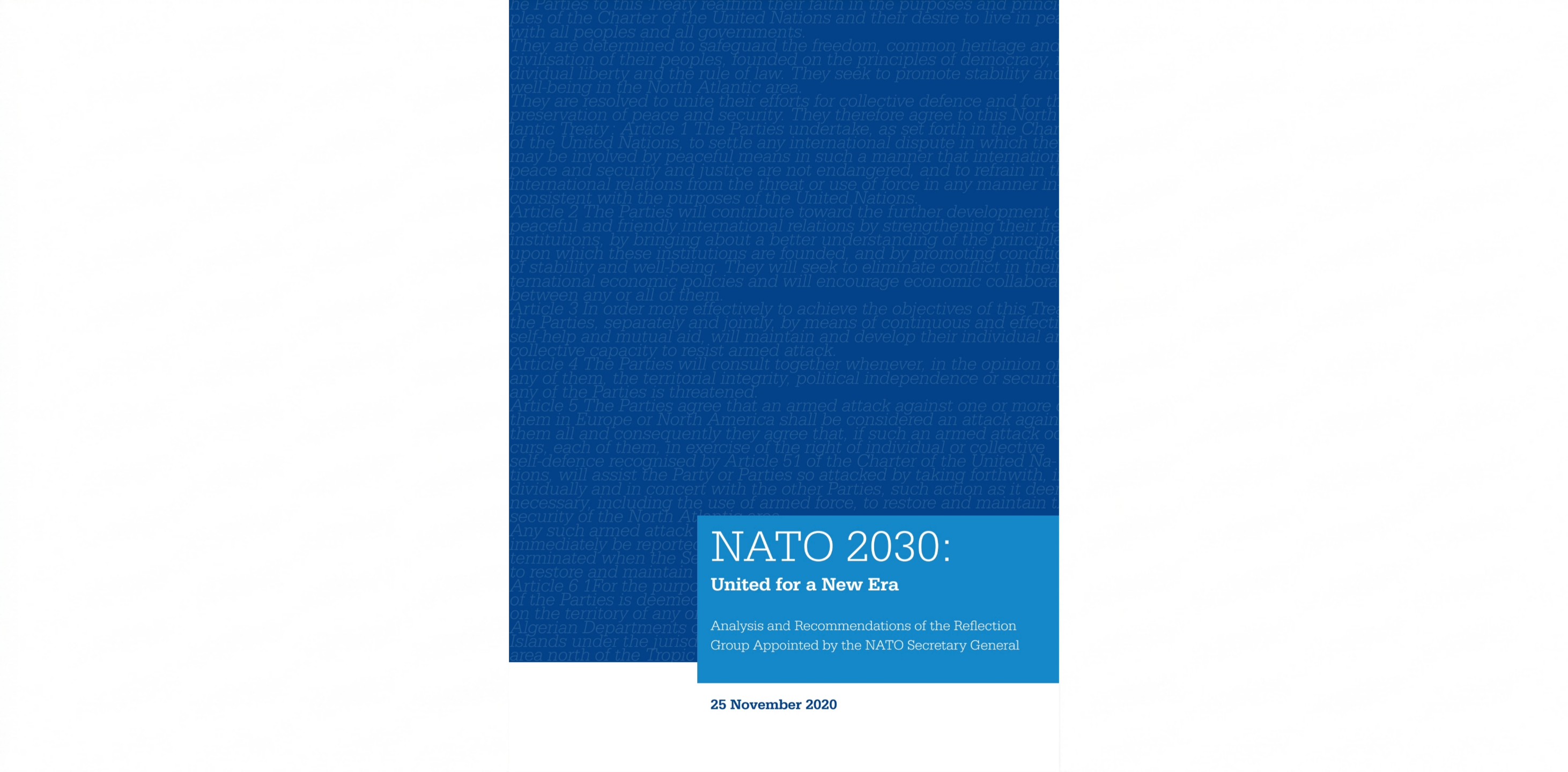
NATO 2030: United for a New Era – Analysis and Recommendations of the Reflection Group
NATO Reflection Group
Download PDFThis report by the Reflection Group appointed by NATO Secretary General Jens Stoltenberg presents comprehensive analyses and recommendations for strengthening the political dimension of the Alliance and adapting to the changing global security environment.
NATO 2030: United for a New Era is the product of the Reflection Group appointed by NATO Secretary General Jens Stoltenberg in June 2020, co-chaired by Dr. Thomas de Maizière and Dr. A. Wess Mitchell. The report was published on November 25, 2020.
Strengthening the Alliance
The report recommends strengthening NATO's political consultation mechanisms, increasing cohesion among members, and more effective use of Article 4 consultations. It also recommends strengthening the role of the NATO Secretary General and consolidating intra-Alliance solidarity.
The Russian Threat
Russia is identified as the greatest security threat to the Alliance. The report recommends strengthening NATO's deterrence and defense capacity in the East, increasing exercises and planning activities, and keeping selective dialogue channels with Russia open.
The China Question
The report comprehensively addresses the systemic challenges of China's rise for the first time. It emphasizes that NATO should develop a coherent assessment of China's activities, maintain engagement with China through partners, and be prepared for China's growing military presence.
Emerging and Disruptive Technologies
The report recommends increasing NATO's research and development capacity in areas such as artificial intelligence, autonomous systems, quantum computing, and biotechnology. The establishment of a NATO Innovation Fund is also among the recommendations.
Climate Change and Resilience
Climate change is addressed as an integral part of security policy, recommending the development of NATO's assessment and adaptation capacity in this area. Setting concrete targets for member states to meet national resilience standards is also included in the report.
Download this publication as PDF
Full text with footnotes and references
Share This Publication